

Meet Tina Surh, Founder & CIO of Sonamu Group

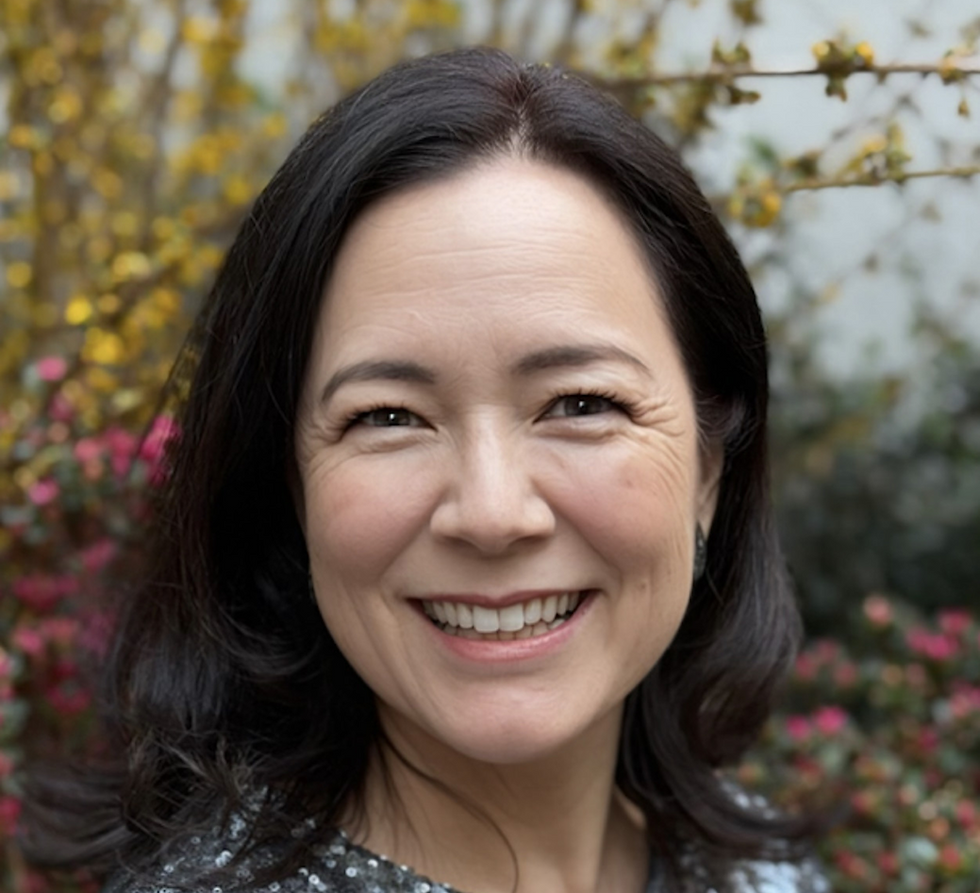
Tina Surh is the Founder and Chief Investment Officer of Sonamu Group, an endowment-style, global multi-asset portfolio built for families, foundations, and principals who want institutional-grade investing in a continuously reinvested, evergreen structure. She was previously Chief Investment Officer of New York University, where she helped grow the endowment from $1.5 to $3.5 billion over a transformative decade and became known for strong risk-adjusted returns and notably lower volatility than her peers. She later served as Senior Advisor and CIO to a large single-family office before founding Sonamu.
Tina began her career not in finance but in the theater, as a drama major and costume designer at Tufts, before Harvard Business School, management consulting at Bain, and direct private equity. Born in Europe to a Korean father and German mother and raised in a multicultural household in Connecticut, she is a Tufts Trustee Emeritus and describes herself, first and last, as a creative.
In this conversation with Michelle Moon for Asian Tech Collective, Tina reflects on the through-line from the arts to capital allocation, why she left the institutional world to build her own vehicle, how early-stage venture lives inside her portfolio, and what it means to be the kind of investor who shows up before it's obvious.
Michelle: Costume designer, a cappella singer, drama major at Tufts, then Harvard Business School and a career in institutional investing. What drew you from there into markets?
Tina: The through-line is that I'm a creative who makes decisions.
When you're a costume designer, you're in service. You're helping actors find their character and building the world the story will inhabit. The best design is the least noticeable, because it's so integral to that reality. Institutional investing, especially for mission-driven organizations, is very explicitly in service too. But the principal piece is the driver for me. I need to be a creative who gets to make the final decisions.
And underneath all of it is the same problem: the allocation of limited resources. I first learned portfolio thinking from the head designer on my faculty. Designing a show is like running a little operating company, the vision, the budget, deciding where it makes sense to invest and where it doesn't. Management consulting at Bain and then private equity were each a wider ring of that same discipline, while also moving from adviser toward capital owner. I always knew I was headed toward principal ownership rather than agency, for that same reason: I'm a diligent creative, but I ultimately need to make the key decisions and to be accountable for them.
Michelle: A lot of that independence sounds like it predates your career. Where does it come from?
Tina: Some of it is DNA, and some of it is those formative years. I grew up as the other. Koreans usually don't see me as Korean; white people tended not to see me as white. Even in my economics classes at Tufts, people were surprised I was there, because they associated me with the stage. "Aren't you a theater person?" Yes. And? I can be both.
Experiences like those taught me early not to seek much social validation, which turns out to be a real source of strength. I also grew up in a household where my Korean grandmother and my German mother went to ESL classes together, and my parents could even debate whether forks or chopsticks were superior. When you grow up like that, nothing is the only way. There are always multiple ways to solve a problem, and that's where being open-minded and flexible in thinking kicks in. I can put on corporate drag and perform as a very linear analyst, but my natural state is to be more of a lateral thinker, and that combination turns out to be really effective for investing.
Michelle: You spent a decade at NYU, five as CIO, and helped grow the endowment from $1.5 to $3.5 billion. Looking back, what are you proudest of?
Tina: Overall, it would come down to driving substantive change and building a platform for something that is bigger than any one person involved along the way. A lot also comes down to correctly sensing where the puck is headed and acting accordingly, without being too rigid in your views. Investing is about tomorrow. Yesterday matters only insofar as it informs the path ahead; I don't think capital allocation should primarily reward people for yesterday. What matters is thinking probabilistically about what comes next.
The specific moment I'm proudest of was a real crucible moment, during the global financial crisis. For some context, in early 2009, I was actively leaning into the dislocation while many others were a bit frozen by fear, looking for mispriced assets and optionality. For example, I had BlackRock build us a large tactical credit basket very inexpensively, and the idea was that we didn't have to be heroes: own single-A and double-B risk where the spreads were so out of line it was massively asymmetric and we made something like +35% on that trade. Being able to operate at a scale where you can call up a desk like that, design the basket, and have it pay off at that efficiency was enormously gratifying. In the private markets, I went far down the road to source secondary opportunities, approaching a couple of large foundations about carving out slices of their portfolios and stepping in as a high-quality LP right as it was going to be a phenomenal time to deploy.
But during that time it was also, understandably, a moment when there were instinctive desires across the industry to pull back and get defensive. I saw my primary job as being to make sure we - meaning the institution, led by its fiduciary body the board of trustees - could make an intentional and well-considered decision about the overall strategic direction for the program, rather than a narrowly reflexive one. And so I laid out a full range of options to our board, including an extremely conservative path, alongside my recommended case for staying invested and pressing our advantage. Fortunately it was decided that what I had proposed made sense, and the board chose that path. That period was when I came into my own, navigating something genuinely hard and high-stakes and coming out having done right by the institution. I earned the trust of some very sharp, demanding people, and a lot of my confidence since flows from that.
Michelle: Tell us about a mentor or two you met earlier in your career. What did you learn from them?
Tina: Michael Steinhardt, who chaired the NYU investment committee while I was there, was an important mentor and early sponsor of mine. He was supportive of me as an investor and really reinforced for me that I should trust my own instincts while remaining willing to change my mind. He is associated with the idea of acting on “variant perception” – not disagreeing for the sake of argument but doing enough work to have a rigorous view that differs from consensus. Having an independent view is one thing. Being willing to act on it before it is comfortable, and willing to revise it when the facts change, is harder. I valued that disagreement was never personal; the point was to get closer to what was true. We would ask each other why we saw an idea differently, knowing that either of us might then change our position. If I don't know something, I'll say so, and go try to figure it out. Sometimes the most honest conclusion is that I can't know enough to act, which itself keeps you from getting burned.
I also often say Charlie Munger is my spirit animal, though he was not someone I worked with directly. Charlie and Steinhardt might not seem similar at first, but I draw inspiration from some principles they have in common: think independently, hold a view while staying adaptable, and change your mind when the evidence requires it.
So much of this industry runs on inertia, but sometimes the most important decision is to do nothing. Doing nothing is still a choice you have to be accountable for. Independent judgement requires active intellectual work. This gets at the craft of investing. Our industry is often more interested in the business of investing than the craft of it. I'm passionate about the craft, and I love enabling talent. That's why I want to keep building Sonamu: to keep doing the work I love as a discerning and supportive LP while becoming more helpful to our managers by backing them at a more meaningful scale.
Michelle: What's your vision for Sonamu, and why are you doing it?
Tina: Our tagline is "sustained exceptional compounding," and I mean it. Our purpose really is that simple. I feel very much like an old-school capital owner, and while I don't have billions of my own to behave that way, Sonamu is my vehicle for it. It's my palette for solving the central problem of staying wealthy and compounding wealth over a very long time.
As investors, we have to contend with significant changes, structural issues and regime shifts occurring in the world now, and I don’t think navigating this will simply call for the same playbook that worked in the decades of globalization and falling inflation. So in a way, I’m building the investment vehicle that I feel I need and cannot get elsewhere.
There's a personal layer, of course. Like anyone, I want to take care of my family and eventually be a more meaningful supporter of the causes I care about. When I was asked to become a trustee at Tufts, it wasn't because I'd given them millions; I was a quirky example of what you can do with a liberal arts degree, the drama major who became CIO of NYU.
But another real motive is that scale also lets me be a better LP. Three-quarters of Sonamu's assets are with external managers, and I expect that will stay between 70% and 90%. A portfolio of talent gives me more leverage than any single team I could assemble under one roof. What I love most is showing up before it's obvious, when it's still hard to underwrite something because it hasn't happened yet.
A good example is the intersection of life sciences and data. I started pursuing it almost ten years ago, and I'd tell the people I was backing that the institutional community would come around in about five years, once the results were tangible enough to see. But the inputs made it inevitable: the collapsing costs for both gene sequencing and compute, what was happening with machine learning, those worlds were going to come together. So I wanted to find the people forming that space early.
Some of my LPs today are managers where the relationship has come full circle, because I was there day one, when they were working hard to get their first check. That's the whole point for me. When someone raises their first $100 million, I want to be able to say, "We're in, and here's ten," because that moves the needle, and you never forget your early believers. My only constraint on being that kind of LP for the next generation is AUM. It's not temperament, and it's certainly not the mandate. I've set up everything to enable exactly this.
Michelle: Sonamu is evergreen, continuously reinvested, with no capital calls. Why does the structure matter as much as the strategy inside it?
Tina: Because the structure is what lets you actually behave like a long-term owner. I don't run in silos. I'm not an asset-class head confined to one lane, pushing to create liquidity before it's right for the underlying investment. I'm using the whole portfolio as one system, so the liquid parts, the income-generating assets, real estate, the stock-pickers, can support the things that need ten years before they go public. And when one of those does go public, I can also take the shares in kind and hold for another ten if the future is still ahead of it.
An evergreen structure lets me do that without the artificial clock that so often forces selling at the wrong moment. I've seen long-term portfolios disrupted, not because the investments were wrong, but because a mandate, governance change, or a liquidity need arrived at an inconvenient time. A durable, continuously reinvested vehicle is how you protect the opportunity for compounding, reduce the friction of capital activity – from funding calls and receiving distributions to changing managers – and how you keep the majority of the value where it belongs, with the capital owner.
Michelle: Your record was built on downside protection and low volatility. Venture is the one asset class where the whole game is the right tail. How does that fit inside a portfolio built around avoiding big mistakes?
Tina: You're playing for the far right tail, yes. But venture is also the strategy with arguably the widest dispersion of outcomes in investing, so for any single manager or vehicle the range of possible outcomes is extraordinarily wide. That makes it a genuinely hard space to deploy into well, and there's a real echo chamber around it, a lot of talking about outcomes as if they were preordained, as if you just keep putting capital into the hottest things.
I try to be a very disciplined allocator. Early in my career in buyouts, a mentor told me I'd do well because I never fall in love with my deals, and it's true. It doesn't matter how many months I've put into something; if the facts change, it's a sunk cost. At the same time, the best venture managers, increasingly founders themselves, carry an almost unreasonable amount of self-confidence, that will to keep throwing themselves onto the entrepreneurial journey. You never want to squash that. But you look for the ones who pair it with a little humility and think about how they'll engineer their own staying power, not just their vision.
I think about my own investing the same way. I can go from the squishiest end of equity risk, seed-stage deep tech, to the grittiest asset-backed workouts in industrial loans, and I love both. If you build a truly diversified portfolio where nothing is ever big enough to kill you, where outcomes are more idiosyncratic, and where you repeatedly select for asymmetry in downside versus upside, it tends to work out very well over time. Charlie Munger’s basic point was: avoid the idiotic mistakes, and live a long time. So I have a short-term paranoia around risk, and with anything I'm looking at I can't help asking first: how do we lose? How does this go wrong? Only once I'm satisfied there do I let myself think about the upside. It's a little counterintuitive, because the instinct for most of us is to lead with the upside. But I'm also a creator, and I'm not scared of imagining something that doesn't exist yet. That combination, committed to survival first and then free to enjoy the long run, turns out to be effective.
Venture sits in the portfolio for the highest optionality on that far-right tail. We don't run explicit portfolio leverage, so I use the entire rest of the portfolio – the liquid stock-pickers, distressed credit managers, income-generating assets, real estate, commodities – to fund that early-stage optionality. It's also why, when a venture manager tells me they're top-quartile in IRRs while expecting to produce a 2x over twelve years, it’s not that exciting given the other ways we can achieve that level of return on our capital. Investors need to be compensated for providing capital on an uncertain call schedule and the related opportunity cost of maintaining that liquidity and stable value. For example, a boosted IRR does not make the result costless, simply because the LP capital was called later; the subscription line is not free. Over the last decade, I’ve seen data showing private-market IRRs rising while the multiples on invested capital have been coming down. I'd always rather optimize for the multiple than the optics.
Michelle: When you're underwriting a manager, how do you separate skill from luck?
Tina: It's one of the hardest and most important things to do, because good luck and bad luck are both real. When someone has a great outcome, I want to understand what risks were taken to get there, and how many of the bad things that could have happened simply didn't. Those near-misses are underappreciated. The reverse is true too: sometimes the most interesting person to back is someone who had a rough run that came down to bad luck rather than bad judgment. They've usually learned things that make them better, and some of my most rewarding investments started exactly there, stepping in when others were hesitant.
The other thing I've come to believe is that the best equity investors eventually find their way to quality, to businesses with real staying power that compound for a long time. It's easy to underappreciate, because quality can look slower than the flashier things. But over a long horizon, it tends to win.
Michelle: You've said you care more about the craft of investing than the business of it. What does good alignment between a manager and their investors look like to you?
Tina: The simplest test is to look at the total economic value a manager creates, and then how it's shared between the manager and the investors providing the capital. When the split is genuinely fair, and especially when the manager’s back end reward is proportionate to the risk and tied to performance, that tells you a lot. I appreciate digging into a manager's expenses and discovering they’ve charged less than one might expect or that they could, simply because they think it's the right thing to do, whether or not anyone's watching. That instinct, behaving as a steward and with genuine respect for others’ capital, is exactly what I'm looking for. It's not about policing anyone; it's about finding people who are intrinsically motivated to do right by their investors, because those are the relationships that last.
Michelle: Our readers live inside the AI wave. As an allocator looking across it, where do you think it actually lands?
Tina: I suspect adoption could take longer than the current excitement implies, and a lot of it comes down to cost. When Excel became widely available, you could suddenly run a hundred times more analysis and make a hundred more slides, but the extra volume didn't necessarily get you to a better answer. A lot of early AI use may be like that: if it's cheap, you do a lot of it; if it's expensive, you reserve it for what really justifies the spend. It'll take time for the right hardware, software, and cost to line up behind the applications where it genuinely changes the work.
The thing I find myself watching is the sustainability of the capital going in. In venture right now, it's hard for any participant to opt out entirely. As a system we're not really asking whether the capital being assumed is actually limitless, and history suggests it isn't. The railroads, automobiles, airlines, fiber, every great build-out delivered real transformation and destroyed an enormous amount of capital along the way. I'd expect some of that this time too. So for me the question was never whether the technology is real; it's how you participate without getting carried out. What's worked for me is being early, spreading a lot of small bets, and using the whole portfolio to fund that optionality, and when something goes public with a real future ahead of it, I would be very happy to take the shares and hold. But to be clear, history suggests that will not be the outcome for the majority of companies.
Michelle: You've built something unconventional, from an unconventional path. What do you hope it signals to people watching?
Tina: I hope it shows you can keep your own voice and still succeed. I'd love to be a bit of a counterfactual to a lot of what's out there. Part of that is temperament: you have to be a tough critic and a skeptic in this work, but choose not to be a cynic. Skepticism keeps you honest; cynicism just corrodes. And I'm a humanist at heart. Even in this age of extraordinary tools, the best of them reward people with creativity and agency, so I want to keep the focus there, on enabling talented people and backing them early. If Sonamu can be a small proof that you can do this your own way, that would mean a lot to me.
Michelle: What is one tradition from your heritage that you still practice or deeply value today?
Tina: I’ll share one from each heritage. From my German side: every year I’m pretty serious about my “weihnachtsbäckerei” (Christmas baking) which is a pretty intense multi-week affair involving a dozen or more varieties of cookies, and the practice held a lot of meaning for my mom when she was alive. From my Korean side, every year we must eat tteok mandu guk to celebrate the start of the new year. And we were always told we wouldn’t grow a year wiser without it so it wasn’t really optional. Fortunately it’s one of my favorite foods.
Michelle: If you could place your own message inside a fortune cookie, what would it say?
Tina: ”Life is short. Wear more costumes.” This is actually something I say to my kids all the time!
Michelle: After a tough or draining day, what's your go-to comfort food?
Tina: When I have a cold, nothing is better than some sundubu jjigae to help me feel better. But after a long day, my go-to comfort food is to watch k-dramas on Netflix. Now that I think of it, given how important food is to Korean culture, there are always plenty of scenes involving food or sharing a meal, because there's so much emotional symbolism – so I guess I get all that minus the calories!


Comments