

Meet Hana Yang, Co-founder and CXO at Allocate

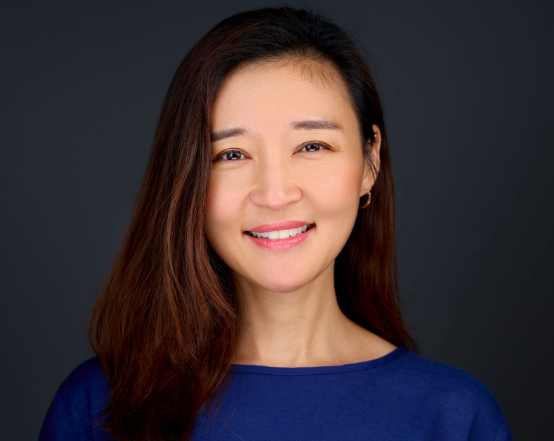
In this month’s ATC spotlight, we sit down with Hana Yang, co‑founder of Allocate, whose remarkable journey spans three continents and a career shaped by impact, resilience, and deep purpose. From her upbringing in Argentina to building intelligent infrastructure for private markets, Hana shares how her tri‑cultural identity, entrepreneurial family roots, and passion for access have informed her leadership. She opens up about the realities of startup life and the mindset shifts that helped her thrive. An inspiring read for founders, operators, and anyone navigating ambitious career and life paths.
Judy: Tell us about your background and how your upbringing shaped your career journey.
Hana: I believe deeply that where I come from shaped not only my journey but also the way I see the world and the work I am doing today. My parents were entrepreneurs in Korea during a period of dictatorship, and they wanted a better life. They did not have a strategic plan in mind. They chose to move to South America because we already had family there, and Argentina was simply an easier place to immigrate to than the United States at the time. That is where they eventually settled.
I grew up in a very small town on the border of Brazil and Paraguay near Iguazu Waterfalls. It was a developing region with limited access to resources and almost no access to information. For the first sixteen years of my life, I did not speak English. Tourists visited the waterfalls constantly, and because I was young and Asian, they often approached me believing I could understand them. I had no idea what they were asking, but the interactions stayed with me. They made me aware that if I wanted access to greater opportunity and the ability to help people meaningfully, I needed to learn English and eventually make my way to the United States, where we also had relatives.
At sixteen, I made the decision to move. I deliberately avoided places like California, New York, and Miami because Spanish is widely spoken in those areas, and I wanted full immersion in English. That intention led me to choose what felt like the middle of the country, a tiny town called Hays, Kansas. I lived there for a year, learned English, and planned to return to Argentina in 1999. That year the country experienced major political and economic turmoil, including the currency crisis and having five presidents within a single week. I realized returning would not offer a stable future.
I stayed in the United States, moved to California to be closer to family, finished high school, and eventually attended UC Berkeley. I often describe myself as “tri cultural.” I identify strongly as Korean, Latino, and American, and I embrace all three identities fully. They are a core part of who I am.
After college, I began working in management consulting for financial services following an early role in Morgan Stanley’s Wealth Management group. A mentor there encouraged me to pursue either consulting or investment banking as a strong foundation for any career path. During my consulting years, many projects focused on offshoring work to India and replacing existing roles with new technology. I spent a great deal of time interviewing executives whose jobs were about to be automated. The work did not inspire me, and I began to recognize that this was not the environment where I wanted to build my career.
That realization pushed me toward the nonprofit world. I believed philanthropy was where meaningful impact happened, and I wanted to understand how I could contribute to that impact. I went to graduate school to study nonprofit fundraising, interned at the United Nations, and worked across both grassroots organizations and large institutions. Through these experiences, I discovered that fundraising is truly the lifeline of every mission-driven organization. No matter how inspiring a mission is, nothing moves without sustained funding. I saw this across different types of organizations. Teams were deeply passionate, but their ability to deliver impact depended entirely on whether they could secure the resources required for their work.
At the same time, I experienced the weight of bureaucracy, particularly within large institutions. Processes were slow, approvals moved through many layers, and administrative structure often created barriers between a problem and the solution. Even when people cared deeply about the mission, the system itself could limit progress. The contrast between the urgency of the work and the friction created by the system made fundraising feel both essential and ready for innovation.
During this period, the landscape around fundraising was beginning to shift. Donation-based crowdfunding platforms were gaining momentum. Perk-based platforms like Kickstarter and Indiegogo were becoming mainstream. The Jobs Act sparked conversations about equity-based crowdfunding. It felt like a moment when technology was starting to widen access to capital in ways that traditional nonprofit structures struggled to achieve.
Seeing these trends reinforced my belief that challenges around access and fundraising were not simply operational. They were systemic. That realization shaped the direction I wanted to take my career. It pulled me back toward the tech and venture ecosystem, where speed, tools, and innovation had the potential to solve problems at scale.
All of these experiences, from my parents’ entrepreneurial example to the limited access I had growing up to my desire to help and empower others, shaped my path. They eventually brought me to Silicon Valley, into venture, into a partnership with Samir, and ultimately into building Allocate.
Judy: As your journey brought you to Silicon Valley, what were the key experiences that led to the co-founding of Allocate?
Hana: After spending time in the nonprofit world and exploring innovation in fundraising, I returned to Silicon Valley in 2011 with the intention of fully immersing myself in tech. I wanted to experience everything, which led me to early-stage venture, working at a startup, joining an accelerator, and then becoming part of the Kauffman Fellows program. That experience gave me a deeper understanding of venture capital and also exposed me to the idea of raising a fund to support companies coming out of the accelerator.
During Kauffman Fellows, I met Samir. He had a compelling value proposition centered around helping clients with true value‑add support, not just providing capital. That included helping with connections, assisting founders with their decks, supporting fundraising efforts, and all the hands‑on work we had done together later at First Republic Bank. I immediately found that approach interesting and aligned with how I naturally liked to operate. On top of that, Samir was already known as a major supporter of emerging managers, and I saw it as a great opportunity to learn from him.
When I joined him in 2015, we worked together to build that program to support the venture capital ecosystem and the team at Citizens continues that work today. Eventually, in 2021, we realized there was a much bigger opportunity to build something independently. I had always been entrepreneurial, even from the time I moved from Argentina to Kansas at sixteen. It came from both nature and nurture. My parents were entrepreneurs, and I naturally gravitated toward taking risks and starting new things.
When the idea of launching something together became real, I reminded Samir that I had always told him, “If you ever want to do something entrepreneurial, let me know. I’ll be ready.” When the right moment came, I didn’t hesitate. I jumped in because I believed in the mission, the opportunity, and the partnership. That is what ultimately led us to co‑found Allocate and build it into what it is today.
Judy: What core values guide how you lead and build your team today?
Hana: The values that guide how I lead and how we build our team at Allocate come from a combination of personal experiences, lessons from my parents, and advice from mentors throughout my career. I think of our company’s evolution not as a series of pivots but as a continuous learning process. Startups require you to adapt, evolve quickly, and apply the lessons along the way, and these values ground me through that process.
One of the earliest lessons I learned from my parents is incredibly simple, yet powerful: do right by others. It’s the idea of treating people the way you want to be treated. That principle shows up in how we work with clients and how we work with each other. It is the basis for what we call client and colleague empathy. Whether you are helping an LP, collaborating with a teammate, or building a product, approaching people with respect and integrity matters.
Another value that comes from my dad is the importance of paying attention to details. He always emphasized that the small things matter, even when people think they don’t. Over time, I have seen how true that is. Details shape the client experience, influence trust, and often determine whether something feels thoughtful or rushed. That focus has become part of how we operate, especially as a company building infrastructure where precision is essential.
A third principle came from mentors who taught me what it means to do the right thing. It sounds obvious, but in business the right answer is not always clear. Decisions can involve multiple parties, conflicting priorities, and nuanced tradeoffs. Doing the right thing requires judgment, discipline, and a willingness to take the harder path when it is the ethical one. This value is reflected in one of our core principles at Allocate: relentless problem solving. We often have to work through complexity to arrive at the right solution, and that effort isn’t always straightforward.
These values form the foundation of Allocate’s culture. Extreme client service comes from doing right by others. Our attention to detail comes from understanding that seemingly small actions build long-term trust. Relentless problem solving comes from the belief that doing the right thing often requires persistence.
Another aspect of how we build our team comes from who Samir and I are as founders. We both come from immigrant backgrounds, and because of that our networks are naturally diverse. I have never felt the need to consciously create a DEI strategy to achieve diversity. It happens genuinely because of the circles we move in, the people we value, and the relationships we’ve built over time. When I look at the team on our weekly calls, it makes me proud to see a group of people who represent a wide range of backgrounds and perspectives. It is not something we manufactured. It is simply a reflection of who we are.
All of these values guide how I lead each day: treat people well, care about the details, solve problems with integrity, and build a team that reflects the breadth of our lived experiences.
Judy: How has Allocate evolved from its early days?
Hana: In the very beginning, before Allocate existed, the work we were doing was completely manual. At First Republic Bank, our role was essentially to make it easier for GPs and LPs to find one another and transact. That was the core of what we did: creating introductions, facilitating discovery, helping both sides understand opportunities, and building relationships that otherwise would have been difficult to initiate. The value was clear, but the process was slow and operationally heavy.
When we launched Allocate, we started by building the technology experience with LPs in mind. If you solve for the LP - make their experience better, help them understand opportunities, streamline their workflow -then the GPs will naturally follow, because that is where the capital comes from. In those early days, we focused on investing workflows and the foundational steps: discovery, diligence, and the ability to transact.
As we worked more closely with both LPs and GPs, we realized that investing alone is not enough. Private markets require thoughtful portfolio construction. People were making investments, but they did not always know whether the pacing made sense, whether the check sizes matched their risk profile, or whether their overall exposure was balanced. There was a clear need to help investors construct portfolios intentionally rather than just accumulate deals. That became another layer of what we needed to build.
From there, another issue surfaced. Even if people wanted to invest more, they often lacked the operational infrastructure to support it. Behind every investment is a tremendous amount of work: subscription documents, KYC and AML checks, onboarding, and administrative coordination. Historically, all of this has been time consuming and manual.
To create a seamless experience, we had to build the operational backbone that moves LPs from discovery all the way through to transacting without friction.
As our clients grew their allocations, a new challenge appeared. They wanted to invest more, but they did not always know what was already in their portfolio. Without clear visibility into exposures, strategy mix, and concentration, it is hard for anyone to make informed decisions. That is what led to the development of our Insights product, which gives people portfolio tracking and management capabilities that previously did not exist in an integrated way.
Liquidity became another important pillar. Private markets are not naturally liquid, and while the industry is beginning to innovate in this area, there is still a long way to go. We understood early on that if we wanted to build the future infrastructure for private investing, liquidity had to be part of the long-term vision.
Over time, all of these elements - discovery, due diligence, transacting, portfolio construction, operations, insights, and future-state liquidity - became the foundation of our broader vision. We see Allocate as intelligent infrastructure for the private markets ecosystem. It is not just a place where a specific type of fund gets listed or where only certain LPs can invest. It is a platform where all participants can find each other, transact, understand their portfolios, manage exposure, and access liquidity. Every step of our evolution has been about expanding access, reducing friction, and building toward an end-to-end system that supports the entire private markets lifecycle.
Judy: What advice do you have for founders as well as your younger self before you became a founder?
Hana: Choose to build something you are truly passionate about. It must be a real problem, and it must create real value, but it also has to be meaningful to you on a personal level. That passion is what carries you through the realities of founding a company. I say that from experience, because I am raising three children with a husband who is also an entrepreneur, and we have two startups in one household. None of that would be possible if I did not believe deeply in the work I am doing. Passion is what gives you the energy to keep going when the demands feel overwhelming.
I often hear people ask when the right time is to become a founder or to start a family. My experience has taught me that there is never a perfect moment for either. Life does not present an ideal window where everything lines up neatly. At some point you simply commit and move forward, because waiting for the perfect time can mean waiting forever. I realized this as I was getting older and knew that if I did not take the leap, I might never do it. That applies to both startups and personal life. There is always a reason to delay, but commitment is what moves you forward.
Another important piece of advice is not to measure the difficulty of the journey by comparing your personal circumstances to those of others. Startups are incredibly difficult for everyone. They demand an extraordinary level of focus and resilience. What matters most is the work, the opportunity, and the team you build around you. Once you enter the founder path, the difficulty simply becomes part of the job.
Mental discipline is another critical element. The mind has enormous influence over how you navigate challenges, and it can work for you or against you. If you speak negatively to yourself, that mindset can spiral. If you train your mind with the same consistency that an athlete trains their body, you create a foundation that helps you move through obstacles without becoming overwhelmed. You cannot always control circumstances, but you can control your inner voice. That shift changes everything.
I also remind myself not to let the opinions of others dictate my path. People will always have feedback, whether they are investors, board members, colleagues, or friends. Some of that feedback is incredibly valuable. When it comes from a constructive place, I treat it as a gift. My career taught me that the most meaningful growth comes from being open to guidance, being self-aware enough to know where I can improve, and being disciplined enough to work on those areas. The key is learning to distinguish helpful insight from the noise that can distract or discourage you.
If I were speaking directly to my younger self, I would say this: trust yourself, stay open to learning, and do not take constructive feedback personally. Reframe it the same way an athlete views training. Improvement requires repetition, practice, and humility. Once you understand that, you stop seeing feedback as criticism and start seeing it as a way to get better. That mindset brings confidence without arrogance and resilience without bitterness.
Above all else, believe in what you are building. Passion, commitment, and discipline are what carry you through the hardest parts of the founder journey. These qualities matter far more than any external label or expectation placed on you.


This post made the whole experience feel warm and inviting. Last month, I needed help with assignment support during a hectic week, and simple moments like sharing food with friends helped me recharge. Creating memorable experiences often comes down to thoughtful details and good company. It showed me how self care matters. It helped me understand large projects better. Nice post . Your post make me smile.